

International Conferences
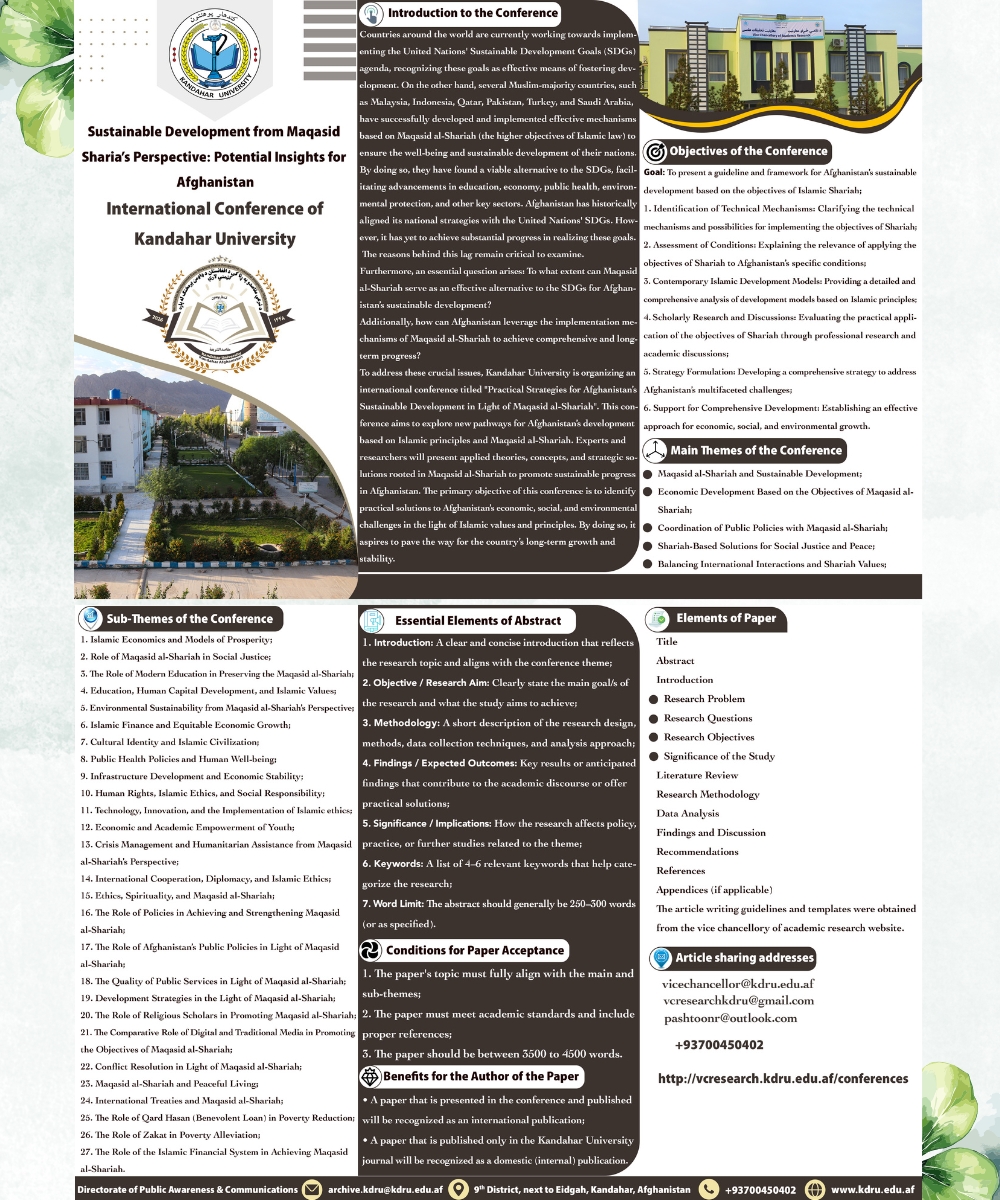
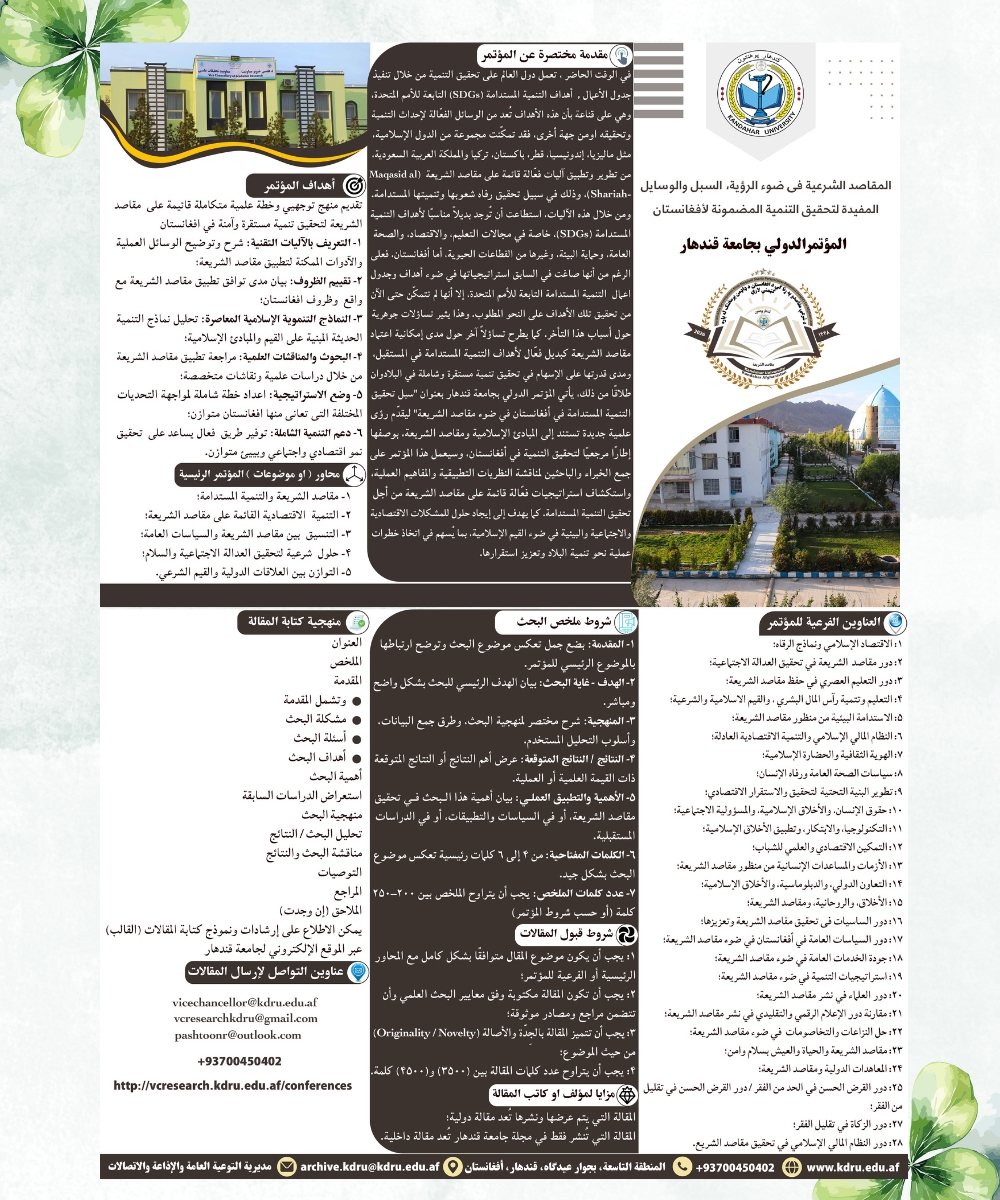
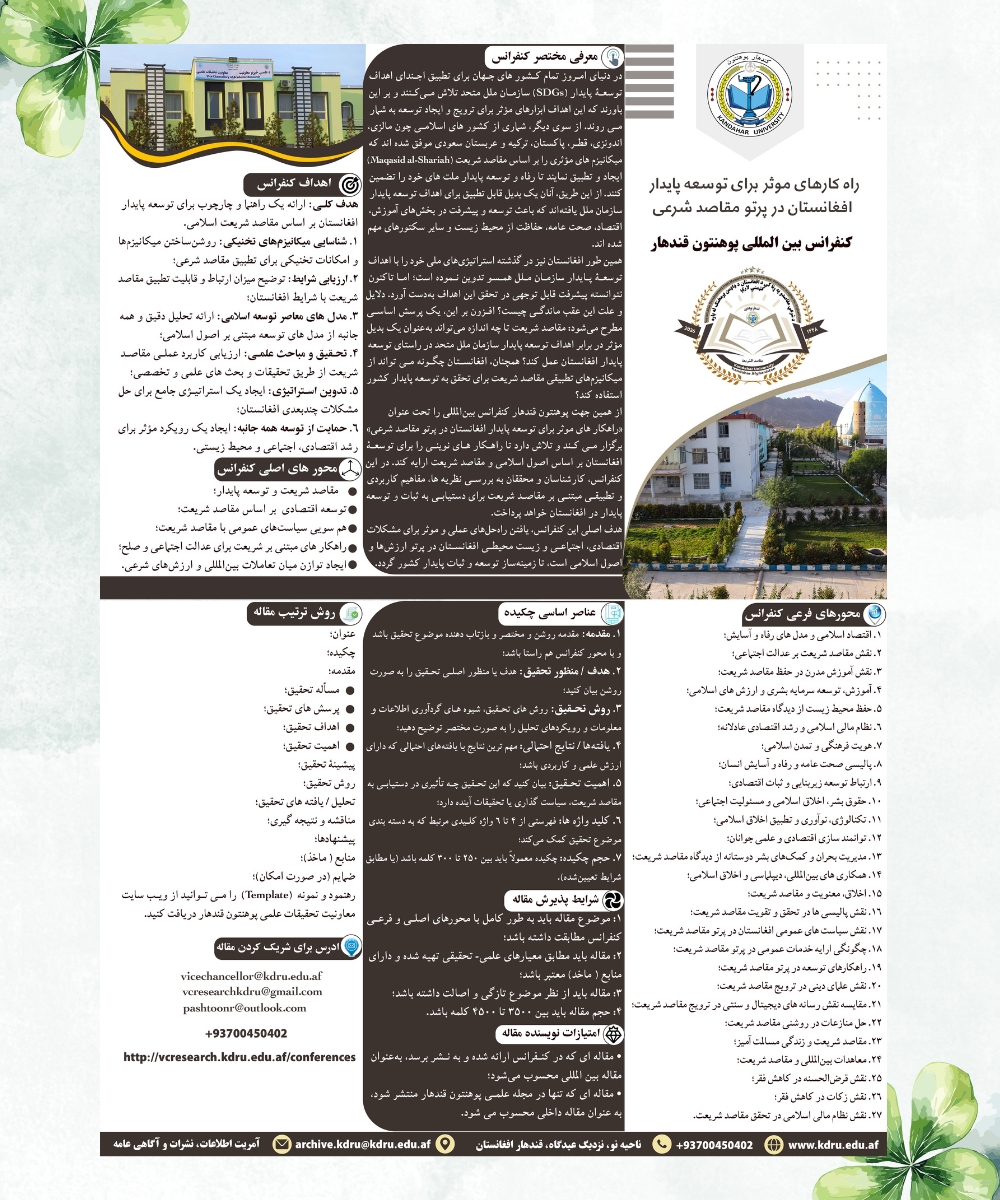
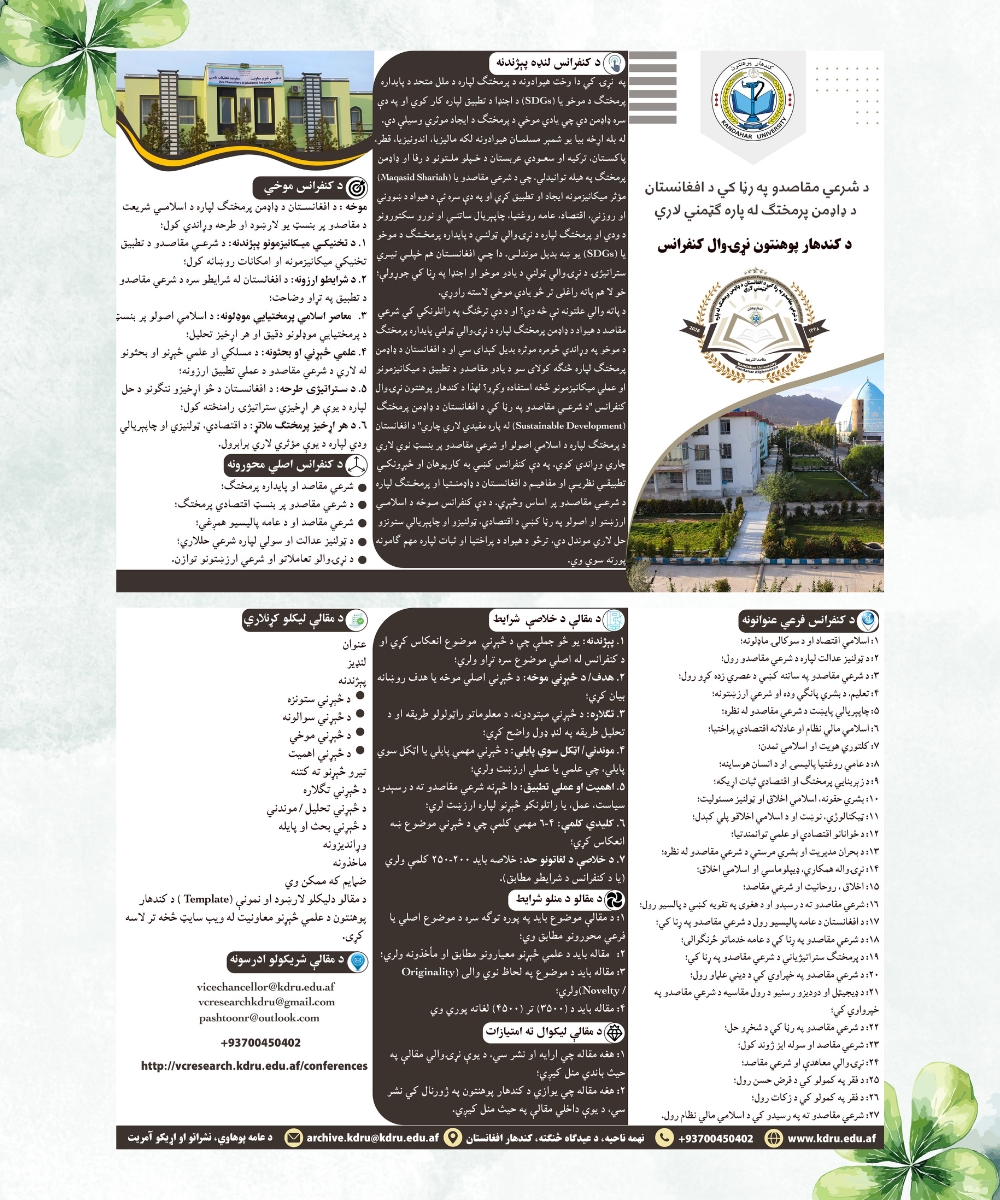
Countries around the world are currently working towards implementing the United Nations' Sustainable Development Goals (SDGs) agenda, recognising these goals as effective means of fostering development. On the other hand, several Muslim-majority countries, such as Malaysia, Indonesia, Qatar, Pakistan, Turkey, and Saudi Arabia, have successfully developed and implemented effective mechanisms based on Maqasid al-Shariah (the higher objectives of Islamic law) to ensure the well-being and sustainable development of their nations. By doing so, they have found a viable alternative to the SDGs, facilitating advancements in education, economy, public health, environmental protection, and other key sectors. Afghanistan has historically aligned its national strategies with the United Nations' SDGs. However, it has yet to achieve substantial progress in realising these goals. The reasons behind this lag remain critical to examine. Moreover, a critical inquiry emerges: To what degree can Maqasid al-Shariah function as a viable substitute for the SDGs in the context of Afghanistan’s sustainable development? Additionally, how can Afghanistan leverage the implementation mechanisms of Maqasid al-Shariah to achieve comprehensive and long-term progress?
To address these crucial issues, Kandahar University is organising an international conference titled "Practical Strategies for Afghanistan’s Sustainable Development in Light of Maqasid al-Shariah." This conference aims to explore new pathways for Afghanistan’s development based on Islamic principles and Maqasid al-Shariah. Experts and researchers will present applied theories, concepts, and strategic solutions rooted in Maqasid al-Shariah to promote sustainable progress in Afghanistan.
The primary objective of this conference is to identify practical solutions to Afghanistan’s economic, social, and environmental challenges in the light of Islamic values and principles. By doing so, it aspires to pave the way for the country’s long-term growth and stability.
No images available for this conference.
Author Guideline
Call for Papers!
The Vice Chancellory of Academic Research serves as the driving force behind the advancement of scholarly inquiry and innovation within the university.
Our Scope
Quick Access
Our Address
Dist #9, Near to Loya Eidgha, Loya wyala, Kandahar, Afghanistan
Email: vicechancellor@kdru.edu.af
Phone: +93 700450402
Copyright © 2025 All rights reserved with | Kandahar University